Written by Chad Wesley Smith
The 225 rep test is one of the most revered assessments used in the NFL pre-draft process. I don’t feel the 225 test is a good indicator of the type of upper body strength required to be a good football player, a much better test would be something like 225/275/315 pounds, depending on position group, done for a triple with the power measured by a Tendo Unit. The merits of this test can be argued to no end by strength coaches and football scouts alike, but the fact of the matter is this test is here to say, so if you have players you are helping try to make the jump from high school to college or college to the pros, you need to help them improve this test.
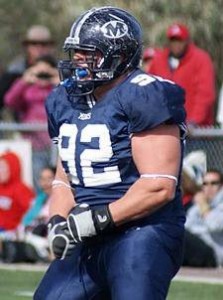
Team Juggernaut’s Blaine Sumner produced one of the greatest results ever in the 225 test during his 2011 Pro Day at Air Force where Blaine, who played his college football at the Colorado School of Mines (D2), did 52 reps of 225. Blaine actually performed 55 reps but wasn’t credited with 3 reps. Either way, Blaine’s 52 reps is 3 beyond the NFL Combine record of 49 reps set by Stephen Paea of Oregon St. Blaine had a very simple approach to his training, just following his usual heavy training (Blaine has a best raw meet bench of 473) and then performing one all out drop set with 185-265 pounds. Blaine credits a lot of his success in the 225 test to improving his technique and rep strategy. Blaine did his 225 test by breaking it up into a number of mini sets. Blaine’s specific strategy was to perform 10 rep clusters up to 40 reps, then two 5 rep clusters and then singles, each cluster of reps was done while holding in one breath.
Success in the 225 rep test requires a combination of maximal strength and lactic capacity in the pressing muscles. The simplest way to increase an athlete’s abilities in the 225 test is to increase their maximal strength because of course an athlete who can bench 450 will handle 50% of their max (225 pounds) more easily than an athlete who is benching 350 and must press 64% of their max. While I certainly agree with this logic, the energy required to increases ones max strength in the bench may not be efficient within the context of a complete combine prep program that also requires an athlete to improve a variety of other physical qualities. Of course this will vary from athlete to athlete based upon their individual strength levels but there is already tons of great information on this website about how to increase your max bench, so I’ll let you read those for yourself about how to do that.
Technique is a critical aspect of success for all lifting and will pay great dividends in your 225 test improvements. Check out these tips to improve your rep skills…
1) Wear a shirt with a rough logo on the back or chalk your back or spray some spray tacky on it, you don’t want to be sliding around on the bench.
2) Pull your shoulders blades together tight and get your chest as high as possible.
3) If you are a competitive powerlifter and bench with a wide grip, you will probably benefit from moving your grip in slightly for this test. 1 ½ to 2 thumb lengths from the center smooth is a good grip for most.
4) Don’t try to create a big arch like you would during a max attempt, as holding this position for the time that this test will take may lead to back cramping. A small to moderate arch will suffice.
5) Plant your feet firmly on the ground, either with your whole foot down or up on the balls of your feet, you want your feet to be solidly placed on the ground so you don’t move around when getting good hip drive.
Check out Chad’s best selling ebook, The Juggernaut Method 2.0!!

Another valuable component of success in this test is to strategize your rep scheme. You saw the rep scheme that helped Team Juggernaut’s Blaine Sumner perform a record amount of reps with 225 earlier in this article. Here are some tips to help you maximize your reps that have been very successful for my athletes here at Juggernaut…
1) Only put the necessary force into each rep that is required. Though I normally advocate moving all reps as explosively as possible, doing that will waste energy in this test. Don’t try to impart 400 pound pressing strength when only 225 is necessary. You want to move the bar quickly but not so explosively that it causes you to lose your setup position. Like John Wooden said, “Be quick but don’t hurry”.
2) Break your test up into several mini sets. Lactic threshold is as much a function of time as it is of work, so you want to get the reps done quickly but going through in one straight shot isn’t what I have found to be most effective. For example, if your goal is to do 27 reps, try breaking it down into something like 16 reps, 5 reps, 2 reps, 1 rep, 1 rep, 1 rep, 1 rep; taking 2-3 seconds and a few deep breaths in between each mini set. Obviously this structure will vary from person to person but it is a template.
A proper warmup can also be the difference between 2-3 reps. Focus on more warmup sets at very low weights to loosen up without tiring yourself out. Try this warmup structure…
Bar x50 (10 reps at 5 different grips working from close to wide)
95×10
135x2x5, 1 set at a regular tempo and 1 set explosively
185×3
225×1
245-315×1, use a heavier weight the stronger you are but don’t let it be over 75% of your max, if 225 is over 70-75% of your max, then you wont perform this over set
Developing great lactic capacity requires the athlete to be able to exceed their current abilities. This is best achieved through a combination of partial range work, reverse band presses and special set structure. Subscribe to Juggernaut to read the rest of this article and learn how to drive up your rep strength and open college coach’s and scout’s eyes with this 10 week training program…

Combine prep is a complex and endeavor that requires great planning. My preferred combine training schedule is as follows…
Monday-Max Speed Sprinting/Jumps/Lower Body Weights
Tuesday-MB Throws/Tempo Runs/225 Rep Training
Wednesday-Change of Direction Training/Jumps
Thursday-Recovery Work
Friday-Acceleration Sprinting/Jumps/Lower Body Weights
Saturday-MB Throws/Tempo Runs/Max Upper Body Strength
Week 1
Rep Day
1) Box Pushups-4×2
2) Reverse Band Press-3xAMAP at 70%. Rack the weight and rest 7-10 minutes. You should rest long enough so that you can replicate your efforts in the next 2 sets, so if you did 30 reps on your first set you should be around 30 reps, +/-2 reps, in the following sets. Shake out your pecs, shoulders, and triceps during your rest period to enhance recovery.
3) Rows/Pullups-5 sets of 12-15 reps
4) Biceps/Neck/Shoulders/Traps-2-3 sets of 8-15 reps of each bodypart.
5) Closegrip Pushups-3 sets to failure with 90 seconds rest between sets.
6) Bodyweight/Medball Abdominal Circuit-30 seconds on/30 seconds off x8 rounds
Max Day
1) Box Pushups-4×2
2) Bench Press-55/60/65/70/75%x5
3) 2 Board Press-2-3 sets of 1 at what is a 8-9 effort
4) Rows/Pullups-5 sets of 12-15 reps
5) DB Incline Bench-2×12 reps
6) Biceps/Triceps/Neck/Shoulders/Traps-2-3 sets of 8-15 reps of each bodypart
7) Bodyweight/Medball Abdominal Circuit-30 seconds on/30 seconds off x8 rounds
Week 2
Rep Day
1) Box Pushups-5×2
2) Reverse Band Press-3xAMAP at 75%. Rack the weight and rest 7-10 minutes. You should rest long enough so that you can replicate your efforts in the next 2 sets, so if you did 30 reps on your first set you should be around 30 reps, +/-2 reps, in the following sets. Shake out your pecs, shoulders, and triceps during your rest period to enhance recovery.
3) Rows/Pullups-5 sets of 10-12 reps
4) Biceps/Neck/Shoulders/Traps-2-3 sets of 8-15 reps of each bodypart.
5) Closegrip Pushups-3 sets to failure with 90 seconds rest between sets.
6) Bodyweight/Medball Abdominal Circuit-30 seconds on/30 seconds off x10 rounds
Max Day
1) Box Pushups-5×2
2) Bench Press-60/65/70/75/80%x3
3) 2 Board Press-2-3 sets of 1 at what is a 8-9 effort
4) Rows/Pullups-5 sets of 10-12 reps
5) DB Incline Bench-2×10 reps
6) Biceps/Triceps/Neck/Shoulders/Traps-2-3 sets of 8-15 reps of each bodypart
7) Bodyweight/Medball Abdominal Circuit-30 seconds on/30 seconds off x10 rounds
Week 3
Rep Day
1) Box Pushups-6×2
2) Reverse Band Press-3xAMAP at 80%. Rack the weight and rest 7-10 minutes. You should rest long enough so that you can replicate your efforts in the next 2 sets, so if you did 30 reps on your first set you should be around 30 reps, +/-2 reps, in the following sets. Shake out your pecs, shoulders, and triceps during your rest period to enhance recovery.
3) Rows/Pullups-5 sets of 8-10 reps
4) Biceps/Neck/Shoulders/Traps-2-3 sets of 8-15 reps of each bodypart.
5) Closegrip Pushups-3 sets to failure with 90 seconds rest between sets.
6) Bodyweight/Medball Abdominal Circuit-30 seconds on/30 seconds off x12 rounds
Max Day
1) Box Pushups-6×2
2) Bench Press-65%x5, 70%x4, 75%x3, 80%x2, 85%x1
3) 2 Board Press-2-3 sets of 1 at what is a 8-9 effort
4) Rows/Pullups-5 sets of 8-10 reps
5) DB Incline Bench-2×8 reps
6) Biceps/Triceps/Neck/Shoulders/Traps-2-3 sets of 8-15 reps of each bodypart
7) Bodyweight/Medball Abdominal Circuit-30 seconds on/30 seconds off x12 rounds

Week 4
Rep Day
1) Drop Pushups-4×2
2) 2 Board Press-60%x3xAMAP. Rack the weight and rest 7-10 minutes. You should rest long enough so that you can replicate your efforts in the next 2 sets, so if you did 30 reps on your first set you should be around 30 reps, +/-2 reps, in the following sets. Shake out your pecs, shoulders, and triceps during your rest period to enhance recovery.
3) Rows/Pullups-5 sets of 12-15 reps
4) Biceps/Neck/Shoulders/Traps-2-3 sets of 8-15 reps of each bodypart.
5) Tricep Death Pushups-Starting a 1 board, perform closegrip pushups until 2-3 reps shy of failure touching your chest to the board, immediately switch a 2 board, then 3 board and finally 4 board.
6) Bodyweight/Medball Abdominal Circuit-30 seconds on/30 seconds off x14 rounds
Max Day
1) Drop Pushups-4×2
2) Reverse Band Press-5×5, working up to a heavy top set
3) Row/Pullups-5 sets of 12-15 reps
4) DB Bench-2×12
5) Biceps/Neck/Shoulders/Traps-2-3 sets of 8-15 reps of each bodypart.
6) Bodyweight/Medball Abdominal Circuit-30 seconds on/30 seconds off x14 rounds
Week 5
Rep Day
1) Drop Pushups-5×2
2) 1 Board Press-60%x3xAMAP. Your goal is to match the reps that you did the previous week off the 2 board. Rack the weight and rest 7-10 minutes. You should rest long enough so that you can replicate your efforts in the next 2 sets, so if you did 30 reps on your first set you should be around 30 reps, +/-2 reps, in the following sets. Shake out your pecs, shoulders, and triceps during your rest period to enhance recovery.
3) Rows/Pullups-5 sets of 10-12 reps
4) Biceps/Neck/Shoulders/Traps-2-3 sets of 8-15 reps of each bodypart.
5) Tricep Death Pushups-Starting a 1 board, perform closegrip pushups until 2-3 reps shy of failure touching your chest to the board, immediately switch a 2 board, then 3 board and finally 4 board.
6) Bodyweight/Medball Abdominal Circuit-30 seconds on/30 seconds off x14 rounds
Max Day
1) Drop Pushups-5×2
2) Reverse Band Press-4×4, working up to a heavy top set
3) Row/Pullups-5 sets of 10-12 reps
4) DB Bench-2×10
5) Biceps/Neck/Shoulders/Traps-2-3 sets of 8-15 reps of each bodypart.
6) Bodyweight/Medball Abdominal Circuit-30 seconds on/30 seconds off x14 rounds
Week 6
Rep Day
1) Drop Pushups-6×2
2) Bench Press-60%x3xAMAP. Your goal is to match the reps that you did the previous week off the 2 board. Rack the weight and rest 7-10 minutes. You should rest long enough so that you can replicate your efforts in the next 2 sets, so if you did 30 reps on your first set you should be around 30 reps, +/-2 reps, in the following sets. Shake out your pecs, shoulders, and triceps during your rest period to enhance recovery.
3) Rows/Pullups-5 sets of 8-10 reps
4) Biceps/Neck/Shoulders/Traps-2-3 sets of 8-15 reps of each bodypart.
5) Tricep Death Pushups-Starting a 1 board, perform closegrip pushups until 2-3 reps shy of failure touching your chest to the board, immediately switch a 2 board, then 3 board and finally 4 board.
6) Bodyweight/Medball Abdominal Circuit-30 seconds on/30 seconds off x14 rounds
Max Day
1) Drop Pushups-6×2
2) Reverse Band Press-3×3, working up to a heavy top set
3) Row/Pullups-5 sets of 8-10 reps
4) DB Bench-2×8
5) Biceps/Neck/Shoulders/Traps-2-3 sets of 8-15 reps of each bodypart.
6) Bodyweight/Medball Abdominal Circuit-30 seconds on/30 seconds off x14 rounds
Week 7
Rep Day
1) Rebound Pushups-4×2
2) Rest Pause Bench Press-225x3xRest Pause Sets. Each rest pause set is comprised of 3 smaller sets, this is done to extend your rep capacity through the use of short rest periods. Begin by repping out 225 until you feel like you can only do 2 more reps, rack the weight and rest for 30 seconds, rep 225 until you can only do 1 more rep, rack the weight and rest for 30 seconds, rep 225 until you feel you will miss the next rep. Rack the weight and rest 7-10 minutes. You should rest long enough so that you can replicate your efforts in the next 2 sets, so if you did 30 reps on your first set you should be around 30 reps, +/-2 reps, in the following sets. Shake out your pecs, shoulders, and triceps during your rest period to enhance recovery.
3) Rows/Pullups-5 sets of 12-15 reps
4) Biceps/Neck/Shoulders/Traps-2-3 sets of 8-15 reps of each bodypart.
5) Closegrip Pushup Mechanical Drop Set-Perform 3 mechanical drop sets, each comprised of 3 mini sets. Begin by performing pushups with your feet elevated on a 6-12” box until you can only do 2-3 more reps, continue to do pushups with your feet and hands on the ground until you can do 1-2 more reps, continue by doing pushups with your feet on the ground and your hands up on the box that your feet were previously on. Rest 2-3 minutes between sets.
6) Bodyweight/Medball Abdominal Circuit-30 seconds on/30 seconds off x14 rounds
Max Day
1) Rebound Pushups-4×2
2) Bench Press-60/70/80%x5 reps, at this point the maximal strength gains you can make and their impact on your 225 test will be minimal, so you need to dial back your maximal strength work so you can better recover from your rep work.
3) Rows/Pullups-5 sets of 12-15 reps
4) DB Floor Press-2×12 reps
5) Biceps/Neck/Shoulders/Traps-2-3 sets of 8-15 reps of each bodypart.
6) Bodyweight/Medball Abdominal Circuit-30 seconds on/30 seconds off x14 rounds
Week 8
Rep Day
1) Rebound Pushups-5×2
2) Rest Pause Bench Press-225x2xRest Pause Sets. Each rest pause set is comprised of 3 smaller sets, this is done to extend your rep capacity through the use of short rest periods. Begin by repping out 225 until you feel like you can only do 2 more reps, rack the weight and rest for 30 seconds, rep 225 until you can only do 1 more rep, rack the weight and rest for 30 seconds, rep 225 until you feel you will miss the next rep. Rack the weight and rest 7-10 minutes. You should rest long enough so that you can replicate your efforts in the next 2 sets, so if you did 30 reps on your first set you should be around 30 reps, +/-2 reps, in the following sets. Shake out your pecs, shoulders, and triceps during your rest period to enhance recovery.
3) Rows/Pullups-5 sets of 10-12 reps
4) Biceps/Neck/Shoulders/Traps-2-3 sets of 8-15 reps of each bodypart.
5) Closegrip Pushup Mechanical Drop Set-Perform 2 mechanical drop sets, each comprised of 3 mini sets. Begin by performing pushups with your feet elevated on a 6-12” box until you can only do 2-3 more reps, continue to do pushups with your feet and hands on the ground until you can do 1-2 more reps, continue by doing pushups with your feet on the ground and your hands up on the box that your feet were previously on. Rest 2-3 minutes between sets.
6) Bodyweight/Medball Abdominal Circuit-30 seconds on/30 seconds off x14 rounds
Max Day
1) Rebound Pushups-5×2
2) Bench Press-65/75/85%x3 reps, at this point the maximal strength gains you can make and their impact on your 225 test will be minimal, so you need to dial back your maximal strength work so you can better recover from your rep work.
3) Rows/Pullups-5 sets of 10-12 reps
4) DB Floor Press-2×10 reps
5) Biceps/Neck/Shoulders/Traps-2-3 sets of 8-15 reps of each bodypart.
6) Bodyweight/Medball Abdominal Circuit-30 seconds on/30 seconds off x14 rounds
Week 9
Rep Day
1) Rebound Pushups-6×2
2) Rest Pause Bench Press-225x1xRest Pause Sets. Each rest pause set is comprised of 3 smaller sets, this is done to extend your rep capacity through the use of short rest periods. Begin by repping out 225 until you feel like you can only do 2 more reps, rack the weight and rest for 30 seconds, rep 225 until you can only do 1 more rep, rack the weight and rest for 30 seconds, rep 225 until you feel you will miss the next rep. Rack the weight and rest 7-10 minutes. You should rest long enough so that you can replicate your efforts in the next 2 sets, so if you did 30 reps on your first set you should be around 30 reps, +/-2 reps, in the following sets. Shake out your pecs, shoulders, and triceps during your rest period to enhance recovery.
3) Rows/Pullups-5 sets of 8-10 reps
4) Biceps/Neck/Shoulders/Traps-2-3 sets of 8-15 reps of each bodypart.
5) Closegrip Pushup Mechanical Drop Set-Perform 1 mechanical drop set, each comprised of 3 mini sets. Begin by performing pushups with your feet elevated on a 6-12” box until you can only do 2-3 more reps, continue to do pushups with your feet and hands on the ground until you can do 1-2 more reps, continue by doing pushups with your feet on the ground and your hands up on the box that your feet were previously on. Rest 2-3 minutes between sets.
6) Bodyweight/Medball Abdominal Circuit-30 seconds on/30 seconds off x14 rounds
Max Day
1) Rebound Pushups-6×2
2) Bench Press-70%x5, 80%x3, 90%x1 rep, at this point the maximal strength gains you can make and their impact on your 225 test will be minimal, so you need to dial back your maximal strength work so you can better recover from your rep work.
3) Rows/Pullups-5 sets of 8-10 reps
4) DB Floor Press-2×8 reps
5) Biceps/Neck/Shoulders/Traps-2-3 sets of 8-15 reps of each bodypart.
6) Bodyweight/Medball Abdominal Circuit-30 seconds on/30 seconds off x14 rounds
Week 10 (Week of Combine/Pro Day)
Rep Day (Wednesday if combine is on Saturday)
1) Box Pushups-3×2
2) 2 Board Press-225x3x3-5
3) Rows/Pullups-3×8-12, light
4) Biceps/Neck/Shoulder/Traps-2 sets of 8-15 reps of each bodypart, light.
5) Bodyweight/Medball Abdominal Circuit-30 seconds on/30 seconds off x8 rounds.
Max Day (Day of Combine)
1) Utilize warmup listed above
2) Smash 225 Rep Test
Success on the 225 rep test requires a combination of maximal strength and great lactic capacity and this program is guaranteed to improve your abilities and get scouts noticing you.
Chad Wesley Smith is the founder and head physical preparation coach at Juggernaut Training Systems. Chad has a diverse athletic background, winning two national championships in the shot put, setting the American Record in the squat (905 in the 308 class, raw w/ wraps) and most recently winning the 2012 North American Strongman championship, where he earned his pro card. In addition to his athletic exploits, Chad has helped over 50 athletes earn Division 1 athletic scholarships since 2009 and worked with many NFL Players and Olympians. Chad is the author of The Juggernaut Method and The Juggernaut Method 2.0. Facebook, YouTube, Twitter