Written by Chad Wesley Smith
Recovery is the most overlooked aspect of physical development. No amount of training can yield positive results if you aren’t properly recovering. Recovery is made up of 3 major components, sleep, nutrition and active/passive recovery modalities. This article will focus on the third aspect of the recovery process, active and passive recovery modalities.

How do you know if you are recovered? Recovery must be monitored and there are various ways, some simple and some more complex, to objectively determine your level of recovery and preparedness to train. It is critical to monitor both the recovery of muscular systems and nervous systems. The higher velocity the activity the athlete is participating in, the more important it is to monitor recovery, as training will undoubtedly be more taxing to the nervous system and have a greater likelihood of leading to overtraining. High velocity movements, like sprinting and throwing, are much more sensitive to nervous system readiness, compared to higher force athletes like powerlifters. For example, a 5% reduction in performance due to lack of training readiness for a sprinter could be the difference in a 10.0 second 100m and 10.5 second 100m-a true world of difference in performance, while for a powerlifter a 5% reduction in performance, such as the difference between a 600 and 570 pound deadlift, while significant isn’t nearly the chasm observed in the sprinting example.
Before we examine how to enhance recovery and effectively pair training and recovery modalities together, lets look at some different ways to monitor your training readiness for a given training session. One simple way to measure your or your athletes readiness to train high velocity qualities is to perform a standardized test prior to each intensive training session. Good options for this type of test are a standing long jump or overhead backwards medball/shot throw. It is necessary for you to establish a baseline result in whichever test you choose before beginning a given training block/cycle. Once you have established this baseline number, you will monitor your athlete’s readiness by testing them in the given discipline prior to each intensive training session, where you aim to develop speed/power qualities. If the result in the given day’s test is too far below the baseline number, you will adjust the training load for the day accordingly.
For example, lets take an athlete, “Tim”, who performs a 120” standing broad jump in his baseline testing. Tim can train at maximal intensity as long as he performs a broad jump of <114” (95% of baseline) prior to any sprint/jump/lower body weights training sessions. If Tim fails you to record a result of at least 114” you should reduce his intensity and/or volume by 30% for the given session. An example of this reduction in volume could be performing a heavy set of 3, instead of working up to a 1rm, or if sprinting, reduce the distances of each repetition by 30%. If Tim fails to jump at least 108” (90% of baseline) you will want to forgo the planned training for the day, in lieu of doing some active recovery work or taking a day off. If an athlete, cannot perform at least 90% of their baseline number in a speed/power test like the standing broad jump, they are not prepared to train intensely that day and may be approaching becoming overtrained. There may be times during the year, an accumulation phase of high frequency training or concentrated loading block, that you can expect your athletes to not perform at particularly high levels in speed/power tests and during this time it is fine if your athlete’s after performing in the 90-95% range of their indicator test, given that they are not also expected to perform high output power/speed drills. During this time of year, where the athlete’s readiness is reduced, you want to choose drills that will allow them to get a training stimulus without overloading either their muscular or nervous systems. An example of this, would be to have them perform sled or hill sprints (which are inherently reduced output activities) instead of flying start sprints.
In a recent interview I watched with the legendary Soviet sport scientist, Vladimir Zatsiorsky, he discussed how during his time as a Soviet coach, their primary means of determining athlete readiness was muscular suppleness. Determining muscular suppleness occurs during soft tissue therapy and passive/active mobility training with your athletes, but there isn’t really any guidelines I can give as to what a ready muscle will feel like, that can only be determined through repetition with your athletes.
Another great, very objective way to monitor training readiness is through the use of a device like an OmegaWave, but assuming you don’t have an extra $30,000 at your disposal, the more practical option is use something like a BioForce HRV. BioForce HRV is a heart rate variability tracking device developed by Joel Jamieson who is an extremely intelligent coach that I have great respect for. Heart Rate Variability, in short, is a technology developed in the 1960s by Soviet Russian scientists. HRV technology measures the Autonomic Nervous System (ANS) and its two components, the sympathetic and parasympathetic nervous systems which work to regulate heart rate, blood sugar, blood PH, O2 levels, various hormone levels among other things. HRV measures the time between R waves in the heart beat and uses this information to determine the body’s balance between the sympathetic and parasympathetic systems and from this information it gives you a numerical score which determines your readiness to train for the day. Joel is a really smart coach and his BioForce HRV product and the accompanying text with it, is a great resource for any coach looking to truly improve their programming abilities.

Once you have established how to determine yours or your athlete’s readiness to train, you now are tasked with enhancing that readiness through well structured passive and active recovery means. Passive recovery involves protocols such as hydrotherapy, massage therapy, self myofascial release, and ice baths or anything that basically involves remaining stationary and at a low heart rate. Active recovery means would encompass such things as tempo activities, sled dragging and various forms of aerobic work. Recovery and regeneration techniques, in the same manner as training modalities, must be organized to avoid the body adapting to the stimulus. It is also important to consider that while the role of recovery and regeneration techniques is critical to maximizing training readiness, their improper use can also interfere with the adaptive training process. The body must undergo enough stress to induce change and overuse of recovery modalities can lead to dampening of the training effect. With that being said, the times that are most critical and appropriate to utilize recovery modalities are during restoration blocks (deload weeks), when autonomic balance needs to be restored (you have low training readiness and may be approaching overtraining), and during the competitive season.
The purpose of restoration phases, more commonly called deload weeks, is to bring the body back to a rested state to help it prepare for the next intensive training block. Deloads are critical to the training process to maintain health, both physically and mentally. From my own experience, a deload week often seems like an eternity, at the start of it you feel beat up and like you need a rest, but by the completion you feel anxious to begin hard training again. This psychological effect is one of the most significant reasons I use deloads, they are a great reviver of motivation.
Intense training, mental and emotional stress, all impact your body’s ability to recover and failure to properly manage them can lead you towards overtraining. As you reach higher and higher strength and performance levels, more intensive loading is necessary to receive the desired training effect and with these increased loading levels comes an increased chance of overtraining. Regeneration methods must be used to maintain balance between the sympathetic and parasympathetic nervous systems.
The competitive season is the most important phase of the year to implement recovery techniques. Rarely during the competitive year is your primary goal to improve fitness levels, rather it is to maintain health and facilitate high level performances. Regeneration techniques can be used after intensive practice sessions and competitions to increase readiness for the next competition.
Let’s examine some different recovery and regeneration strategies and how they are best utilized in the training process.
Active Recovery Training
Active recovery work is low intensity, relatively low volume work designed to improve blood flow throughout the body which will increase aerobic abilities, a critical component to enhanced recovery and restoration. A simple example of this type of work is 15-20 minutes of low intensity biking can help alleviate fatigue in soreness in your legs. This type of work is effective because aerobic metabolism provides fuel for restoring, regenerating and building new muscles tissues and aerobic activity increases aerobic metabolism.
Here are some guidelines for active recovery work to enhance recovery…
-Exertion levels should be kept low, 3-4 on a scale of 10
-Low impact exercises, such as biking, running in water and swimming are often better choices than running to avoid extra stress on joints
-Total volume of work shouldn’t exceed 30 minutes
-Heart rate needs to be kept below the anaerobic threshold
-Intensity of exercise should never exceed 75%
-It is optimal to pair this work with mobility drills, bodyweight calisthenics and abdominal work, ie. 20-40 second intervals of aerobic work, followed by 10-20 repetitions of abdominals
-Sport drills performed at a low intensity are a great option for this type of work
Soft Tissue Therapy
Massage therapy from a skilled therapist can be an extremely effective recovery tool. Depending on the type of treatment used either parasympathetic or sympathetic nervous system regeneration can be utilized. Active Release Therapy, Graston, Strain-Counterstrain, and Rolfing, among others types of manual therapies. The quality of therapist you work with will have a great impact on the benefits you will receive from therapy. It is good advice to look for a therapist who utilizes a variety of treatment protocols and don’t treat every ailment with the same treatment.
Sauna Therapy
Saunas are staple recovery techniques, particularly in Scandinavian countries and Russia. Saunas are particularly effective in enhancing sympathetic nervous system function and restoring autonomic balance. Sauna use can also help enhance CNS recovery during times of intense training, poor sleep or high levels of stress in your personal life.
Here is a Sauna Therapy technique that was utilized extensively in the Soviet Union…
- Preheat the sauna to the highest temperature possible, at least 200 degrees is preferable
- Get into the sauna until you break a sweat and then get out
- Rinse off for 5-10 seconds in lukewarm water, dry off and sit for 2-3 minutes
- Get into the sauna for 5-10 minutes
- Take a 30 second shower in as cold of water as you can tolerate, letting the water cover your head completely
- Dry off and sit until you stop sweating, which should take 3-10 minutes
- Get back into the sauna for 10-15 minutes
- Repeat Steps 5-6
- Get back into the sauna for 10-15 minutes
- Take a fairly warm shower for 1-2 minutes
- Dry off, lay down and relax for 5-10 minutes
Cold Therapy
Ice baths are among the most popular recovery techniques due to the fact that many coaches believe they will help minimize muscle damage, reduce muscle soreness, decrease inflammation and generally lead to faster recovery. While the logic behind this use of cold therapy is sound, inflammation and muscle damage are important triggers to begin muscular adaptations which lead to increased fitness. Some research has also shown cold therapy immediately following exercise can reduce levels of anabolic hormones like IGF-1, while also increasing levels of catabolic agents. Cold therapy though does have a role regeneration, particularly during the competition season when high levels of stress must be combated and increased fitness levels aren’t the primary goal. Also if you feel that during a particularly intense training block, cold therapy can be effective in reducing chronic inflammation. Remember that inflammation is an important part of the adaptive process of training so your goal shouldn’t always be to reduce it.

Hydrotherapy
Hydrotherapy includes a wide variety of regeneration techniques, three of the most popular and effective being Hot Water Therapy, Deep Water Floating and Contrast Therapy.
Hot Water Therapy ranges from whirlpools/saunas to outdoor hot springs. Hot Water Therapy aims to increase blood flow, reduce muscle tone, enhance relaxation and stimulate parasympathetic function. The key to Hot Water Therapy is to find your preferred form, as all will have different preferences in water temperature, duration and type of treatment, that you find the most appealing and mentally relaxing.
Deep Water Floating is a rarely used and not widely known. This method is exactly what it sounds like, floating in deep water, at least 12 feet deep for 20+ minutes. Deep Water Floating’s benefits come from the sensory changes due to the body being unloaded from gravity. You can alternate between 10 minutes of swimming and 10 minutes of floating to perform this, also make sure to utilize a floatation device so you can totally relax without using physical effort.
Contrast Therapy is alternating between exposure to hot and cold water, though the exact methods are debated between coaches. Alternating between hot and cold water stimulates circulation and should be used during periods of high intensity work. Here is a protocol for Contrast Therapy…
-Always start with hot and end with cold
-Use 1-5 minutes of each hot and cold, the most common ration being 3:1 hot to cold
-Vary the duration of hot and cold to avoid adaptation
-The greater variation of temperatures, the more effective the treatment will be.
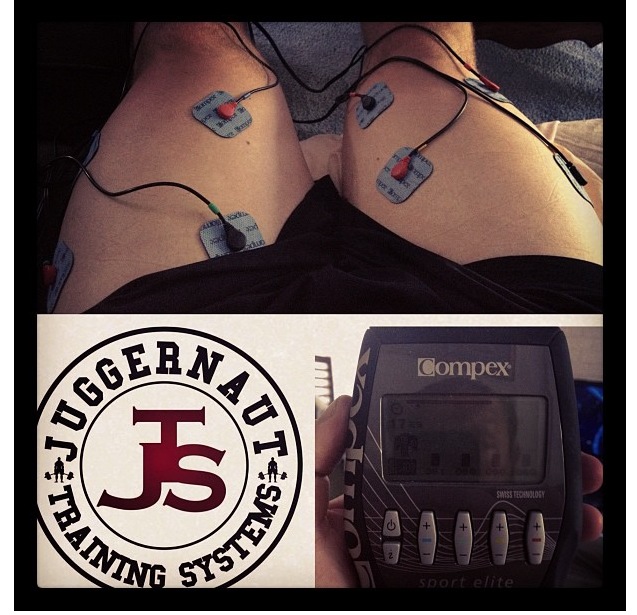
Another valuable tool to be used as a part of an effective recovery and regeneration tool within the context of a well designed program is EMS technology, like the Compex device, which you can read more extensively about in my article, EMS for Maximum Strength and Performance.
It is critical to avoid overuse of recovery and regeneration strategies, as this can actually compromise the results of training. Simplistic thinking is often used to deduce that training itself is “good” while the aftereffects of it such as soreness, inflammation and muscle damage are “bad”. These training aftereffects though aren’t “bad”, they are necessary as it is those aftereffects that signal the body to adapt and grow to the stimulus (training) being presented to it.
Be strategic in your selection which recovery methods to use and when to use them. Make sure to rotate methods to avoid the body adapting to them and their regeneration benefits being lessened. Don’t forget that no amount of recovery and regeneration techniques can overcome poorly organized training or a bad diet and lack of sleep, which are the primary means to promote recovery. Recovery is a critical component to the training paradigm, hopefully you can use this article to improve you ability to monitor your training readiness and improve it through thoughtfully selected recovery modalities.